
Movers in Neighbors Southwest, Beaverton, OR
Home › Beaverton movers › Neighbors Southwest
Call Monday to Saturday(971) 253-5275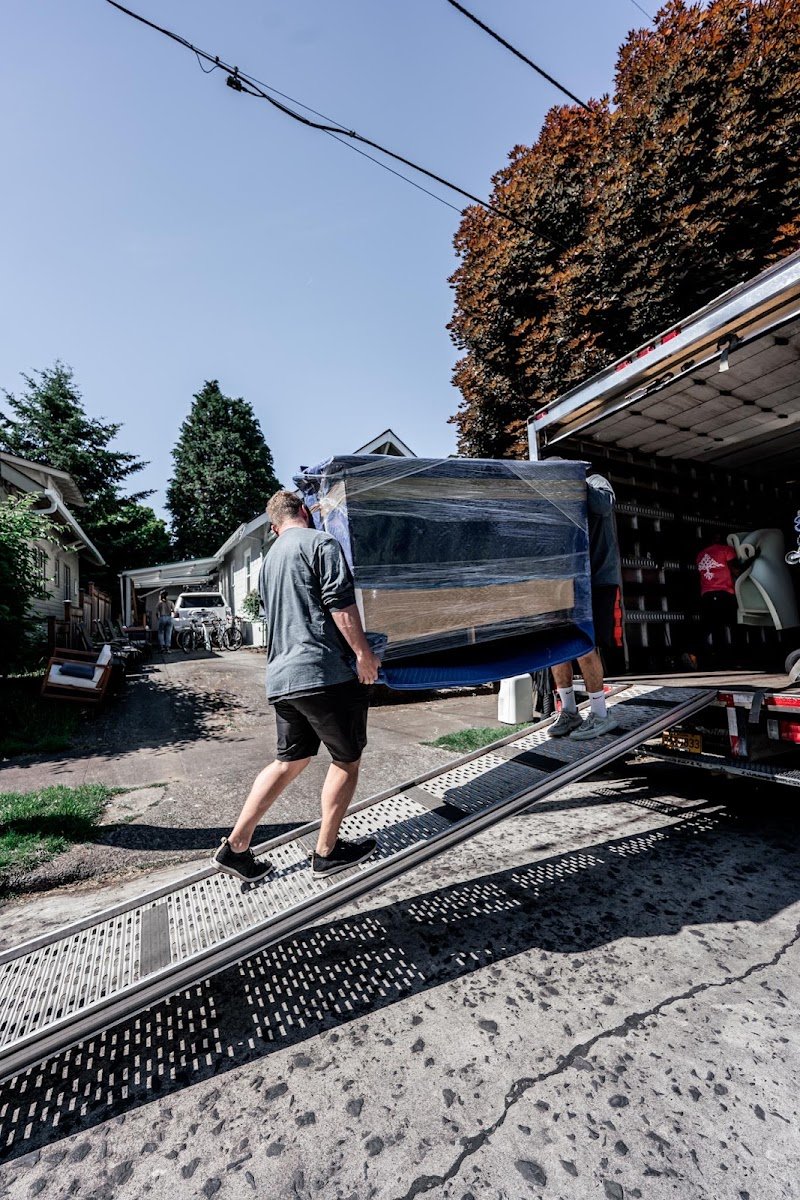
Get Your Free Estimate
Tell us about your move and we will come back with a real number.
Home › Beaverton movers › Neighbors Southwest
371 feet of relief, and no flood zone
Moving Fellows are movers in Neighbors Southwest, the recognized Beaverton association covering the city's southwest corner — the third steepest of the eleven and the one with no mapped flood hazard at all.
A move in Neighbors Southwest is not a generic move
Neighbors Southwest is the southwest corner of Beaverton, and it is hill country by local standards: ground inside the boundary runs from about 178 feet to about 549 feet, which is 371 feet of relief and third steepest of the eleven NACs. It is also the cleanest flood story in the set — interior grid sampling found no Special Flood Hazard Area anywhere inside it, and FEMA maps no named watercourse inside the boundary either. Fanno Creek and Summer Creek are both within about a mile, but neither is in it. This is also where the "Murray Hill" label lands: every geocoded point tested for that name falls inside Beaverton city limits and inside this NAC, which is covered on its own page.
Hills mean grades, and grades are where Beaverton's published standards earn their keep. The City caps street gradients, the fire district caps access grades, and the cul-de-sac standard permits a bulb tighter than a large vehicle turns — all of which are cited below with both sides of the conflicts the City's own documents contain. None of it measures your street. For the move, we quote off the address: frontage, driveway slope, interior turns, stairs, and whether the 26-foot truck at 13 feet tall suits the approach or the 16-foot truck at 11 feet is the better tool on a steep or tight one. Crews dispatch from the shop at 22 NE 2nd Ave in Portland.
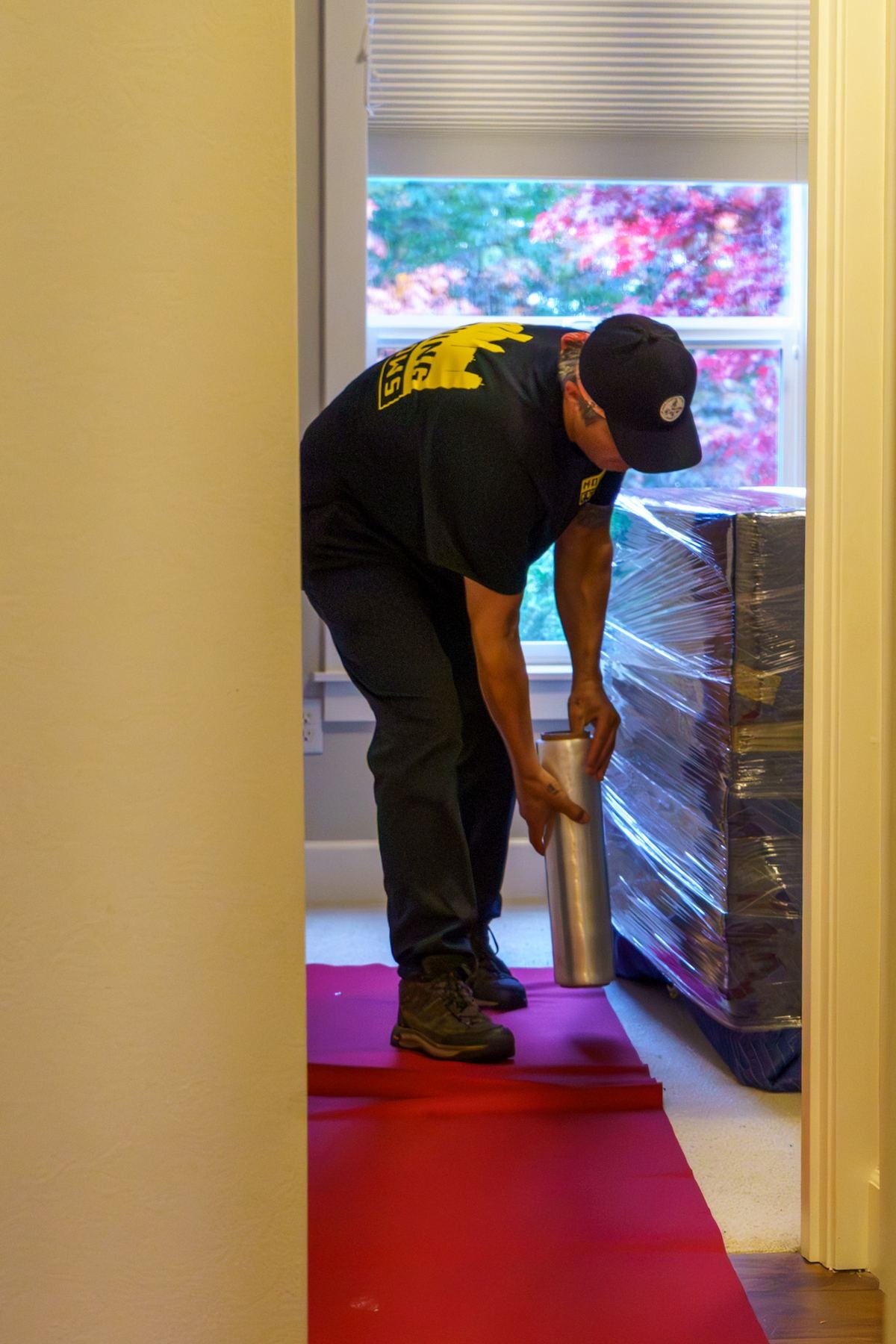
What Neighbors Southwest actually means on moving day
Every line below is sourced, and the source is printed with it so you can check it yourself.
One of eleven, with a map and no written boundary
Neighbors Southwest NAC is one of exactly eleven Neighborhood Association Committees the City recognizes. Its City page, like all eleven, carries a boundary map image and no text description of the edges, so every boundary figure here is derived from the Metro RLIS polygon rather than quoted. The City's Find My Neighborhood lookup settles specific addresses.
Area and edges, derived from GIS
The polygon is 2.4003 square miles in a single ring, with a derived perimeter of about 9.03 miles and 28% unmatched to any named road. Named edges: SW Barrows Rd at 16.3% of perimeter, Scholls Ferry Road (OR 210) at 12.8% plus a further 5.9%, SW Weir Rd at 11.3%, SW Murray Blvd at 7.1% and SW Tile Flat Rd at 5.8%. With better than a quarter of the perimeter following creeks, parcel lines and city-limit jogs, the honest phrasing is bordered in part by those roads.
Third steepest of the eleven: 371 feet of relief
Grid sampling across the polygon interior puts ground between 178.3 feet and 548.9 feet — 371 feet of relief, with the area centroid at about 450.1 feet, the highest centroid of any Beaverton NAC. Only Sexton Mountain (515 feet) and West Slope (461 feet) have more relief. This is a neighborhood-scale figure and not a grade: it does not tell you the pitch of a street or a driveway.
No mapped flood hazard anywhere inside it
At the area centroid the mapping is Zone X, "area of minimal flood hazard", and interior grid sampling found no Special Flood Hazard Area under interior ground at all — entirely Zone X. FEMA also maps no named watercourse inside the boundary; Fanno Creek and Summer Creek are both within about a mile but neither is in it. Along with South Beaverton, this is one of only two Beaverton NACs with a clean result on both counts.
Street gradients: the City's two live editions disagree
The current manual states it flatly: "Maximum street gradients shall be fifteen percent for local streets and neighborhood routes, and 10 percent for all other streets." The superseded 2019 edition carried an extra sentence the current one drops: "Grades greater than fifteen (15) percent must be approved by the City Traffic Engineer on an individual basis." So one edition implies steeper streets are possible with approval and the other caps it outright — and both are posted on the City's site today. We will state the conflict rather than pick a side. Either way, 15% is the number that matters on a hill, and it matches the fire district's own 15% access-grade ceiling.
A legal cul-de-sac bulb can be tighter than a fire truck turns
Standard Drawing 2010 sets a standard bulb at a 45-foot radius to face of curb, but Note 3 permits a reduced bulb on a cul-de-sac serving only residential uses with no more than five abutting units: a minimum 24-foot radius to face of curb — a 48-foot turning circle. The fire district requires an outside turning radius of not less than 48 feet for its apparatus. Both inputs printed: a 48-foot circle against a 48-foot outside radius. That is a real, citable reason a 26-foot truck may need to back out of a small bulb rather than turn in it. Cul-de-sacs may not exceed 200 feet in length, and no more than 25 dwelling units may take access from a closed-end street system without a finding of physical constraint.
Driveway grades, as the City publishes them
On a hillside these are the figures that decide whether a long wheelbase scrapes going in. Maximum longitudinal driveway slope is 15% uphill and −12% downhill; the apron is 12% maximum; sidewalk cross-slope through the driveway is 2% maximum; wings that form part of the sidewalk may not exceed 1:12, which is 8.33%. On a shared driveway serving two or more lots, the slope where each individual driveway meets it must be no steeper than 5%. Standards for driveways built to them — not a measurement of yours.
No moving-truck street permit exists in Beaverton
No curb reservation, no temporary no-parking permit for a move, no street-occupancy permit for a van — no published requirement of any kind. What the City publishes instead is an exemption. Beaverton Code 5.05.115 prohibits obstructing the right-of-way, then exempts, verbatim, "Merchandise, boxes, household goods, building materials or other articles in the actual course of receipt, delivery or removal if the items are removed from the public right-of-way within a reasonable period of time." Household goods in the course of a move are exempt, provided the right-of-way gets cleared.
This is where the "Murray Hill" label actually lands
If you searched for Murray Hill, you are probably here. Four geocoded addresses in that area — 14805 SW Teal Blvd, 15050 SW Teal Blvd, 14805 SW Scholls Ferry Rd and 15555 SW Barrows Rd — all return city limits of "Beaverton" and NAC of "NEIGHBORS SOUTHWEST" in the regional GIS. There is no Murray Hill neighborhood organization anywhere in the Metro region and no federal feature by that name in Washington County. Tigard's city limits do begin nearby to the south and east, so a specific address near the line is worth confirming.
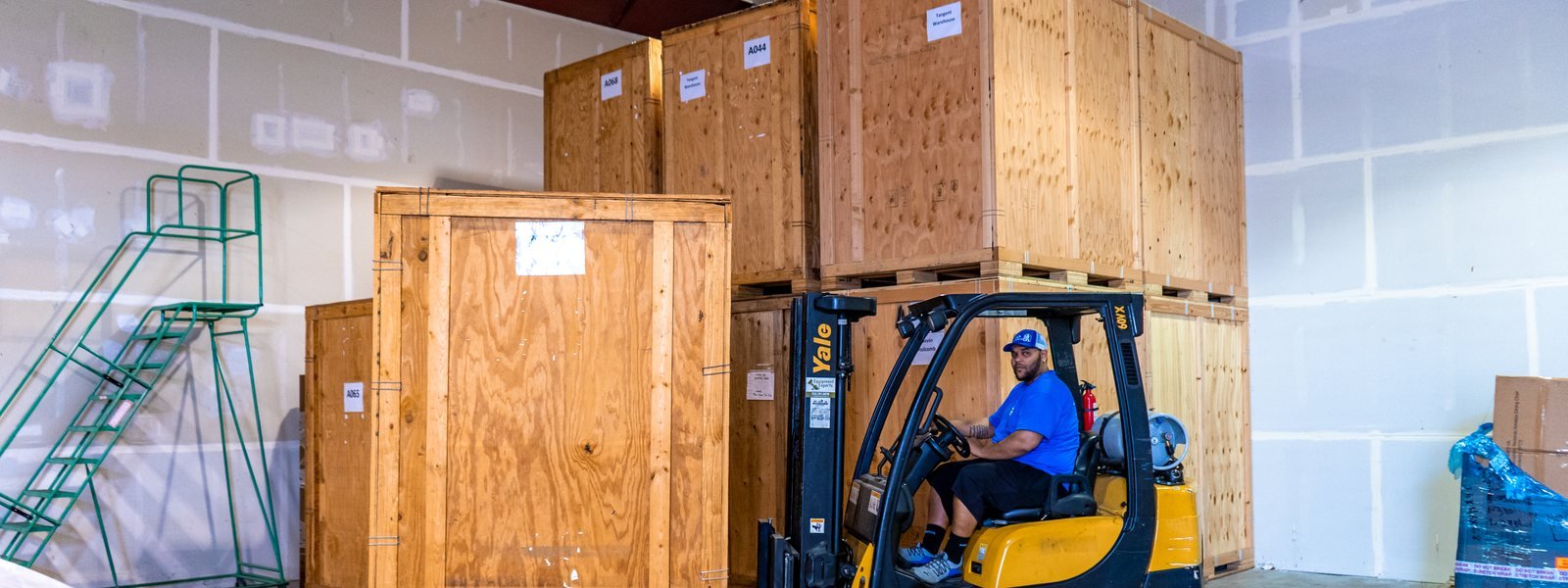
Storage for a Neighbors Southwest move, if the dates do not line up
Your belongings are wrapped, loaded into sealed wooden vaults and stored in our own climate-controlled warehouse under 24/7 video surveillance, with pest control throughout and an itemized inventory of what went in. Priced per vault, with no minimum term and no minimum charge. Storage in Beaverton
Everything we move for Neighbors Southwest
Residential Moving
Houses, apartments and condos, packed and padded properly.
Packing Services
Full or partial packing, with tariff-priced materials.
Labor Only
You supply the truck or container; we load or unload it.
Commercial Moving
Offices and small premises, usually outside business hours.
Specialized Items
Pianos, safes and anything over 300 lbs, priced per article.
Long Distance
Out-of-state moves under our USDOT and MC authority.
Don’t take our word for it
I’m posting this review a year and a half after I used Moving Fellows, but I just made this meme when recommending them to a friend, so I figured that was worth a 5 star review.
Sierra LewisFrom the first quote to the completed move, Moving Fellows was excellent. Lane, Jeramie, and Nathan wrapped all furniture carefully. They made my daughter’s move effortless.
Billie MuellerMoving Fellows was amazing! Alex and Ricky were careful with all of our belongings and completed the move efficiently. They accommodated our late start and even did two trips quickly.
Araceli HelenaReady to get a real number for your Neighbors Southwest move?
Tell us what you have and where it is going. Oregon estimates are non-binding by law, so what you get is an honest figure from an hourly rate, not a guess dressed up as a quote.